Buying a home when you’re self-employed can feel like navigating a maze. While traditional employees can easily show payslips, business owners and freelancers must prove their income stability in other ways. One of the most important aspects of this process involves ABN and tax return requirements. Understanding how ABN requirements and tax return requirements affect your eligibility can make all the difference when applying for self-employed home loans.
This guide breaks down everything you need to know — from how long your ABN needs to be active, to how your tax returns are assessed, and what to do if your financial history is short.
What Are the ABN and Tax Return Requirements for Self-Employed Home Loans?
When you apply for a home loan as a self-employed borrower, lenders must verify your ability to repay the loan. Instead of relying on employer-issued payslips, they’ll look at your Australian Business Number (ABN) registration and your tax returns to evaluate your business’s financial performance.
These documents help lenders gauge how consistent and sustainable your income has been — a critical step before they approve your loan application.
Why Your ABN Matters in the Self-Employed Home Loan Process
Your ABN (Australian Business Number) is your business identity with the Australian Taxation Office (ATO). It confirms that your income is generated through a legitimate trading activity.
Most lenders require your ABN to have been active for at least 12 to 24 months before applying for a loan. This timeframe demonstrates business stability and consistent cash flow.
A short ABN history — such as one registered less than a year ago — can make it harder to get approval. However, if you’ve switched from a similar PAYG role or industry, some lenders may accept a shorter period, especially if your financials are strong.
Tip: You can check your ABN registration details through the official Australian Business Register.
Tax Return Requirements for Self-Employed Home Loans
Your tax returns are the backbone of your loan assessment. They reveal your real income after expenses, which lenders use to calculate your borrowing capacity.
Most lenders will request:
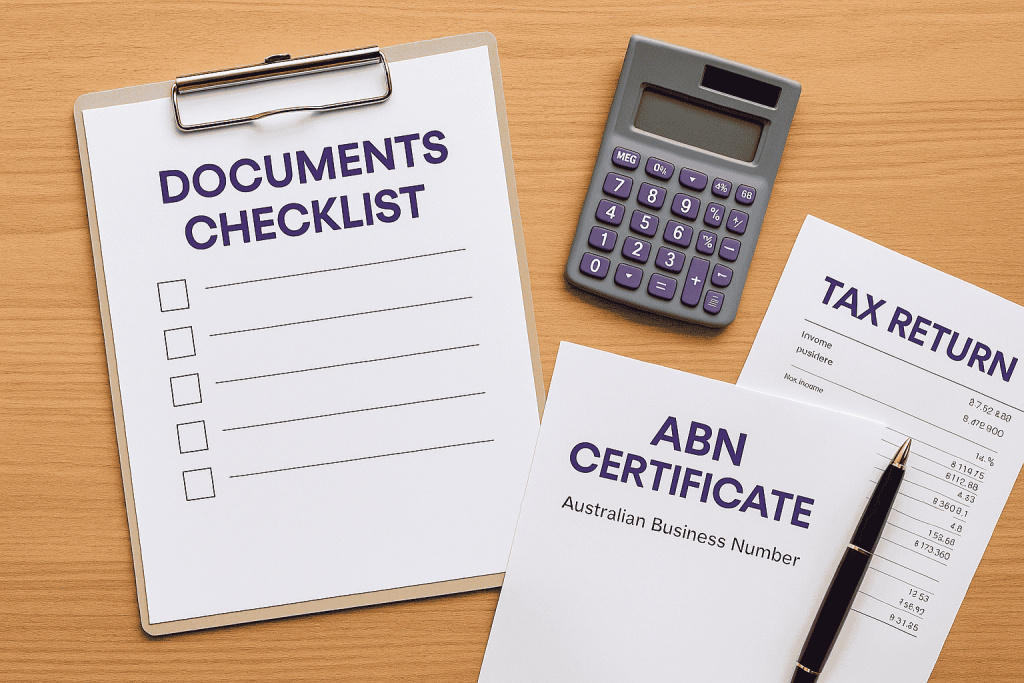
Two years of personal and business tax returns
Notices of Assessment (NOA) from the ATO for the same period
Profit and Loss Statements prepared by a registered accountant
Business Activity Statements (BAS) if you’re registered for GST
Some non-bank lenders may also accept one year of tax returns or alternative financial statements if your business performance has recently improved.
These documents give a clear snapshot of your income, expenses, and taxable profit — all key factors in whether your home loan is approved.
How Long Do I Need to Hold an ABN and Provide Tax Returns?
The usual expectation is:
- ABN held for at least 12 months, ideally 24 months for more loan options
- Two years of personal and business tax returns with Notices of Assessment
- Recent financial documents such as BAS and profit/loss statements if available
Lenders set these requirements to mitigate risk from fluctuating or unreliable income streams common in self-employment.
What If I Don’t Meet the ABN or Tax Return Requirements?
Don’t worry — many self-employed Australians face this situation. If your ABN is new or your tax returns are limited, there are still several paths to home ownership:
1. Low-Doc Home Loans
These loans are designed for borrowers who can’t provide full tax documentation. Instead, lenders may accept:
6–12 months of business bank statements
Accountant declarations verifying income
BAS summaries
While interest rates are usually higher, low-doc loans can be a practical short-term solution.
2. Use Previous PAYG Income
If you were employed before starting your business, lenders might consider your previous salary history alongside your new income — especially if you’re in the same industry.
3. Build a Strong Credit Profile
A high credit score and responsible financial history can help offset limited income documentation. Lenders want to see consistency in debt repayments and savings habits.
4. Work with a Specialist Broker
A mortgage broker experienced with self-employed home loans can help you find lenders who accept flexible documentation or shorter ABN histories.
How to Prepare Your Documents for a Self-Employed Home Loan
Getting organised early will save you time and stress. Here’s how to strengthen your application:
Step 1: Verify Your ABN
Check that your business is listed as “Active” on the Australian Business Register and that all details are accurate.
Step 2: Keep Your Tax Returns Up to Date
Ensure your last two tax returns are lodged and reflect consistent or growing income. Missing tax returns can delay or derail your application.
Step 3: Prepare Financial Statements
Have your accountant prepare:
A verified profit and loss statement
Balance sheet
BAS statements (if registered for GST)
Step 4: Maintain Transparent Records
Keep clear digital and physical copies of invoices, receipts, and business expenses. Transparency boosts lender confidence.
Step 5: Demonstrate Stability
If your income fluctuates, show savings patterns, debt repayments, or future contracts that reflect stability. Be transparent with lenders about your income sources and business situation
Why Understanding ABN and Tax Return Requirements Is So Important
Meeting these requirements doesn’t just speed up your loan approval — it can unlock better loan terms and lower interest rates. Lenders reward borrowers who present clear, verifiable income documentation.
Here’s what getting it right can do:
Increase your borrowing capacity by helping lenders accurately assess your borrowing capacity.
Improve your chances of approval with top-tier lenders
Prevent frustrating document requests and delays from missing paperwork or unclear financials.
Build lender trust in your business’s financial stability
- Increase your chances of competitive interest rates and better loan products
Where to Find More Information
Self-Employed Home Loans and ABN Requirements Explained
Self-employed borrowers face a more detailed assessment process because lenders need to verify irregular income. That’s why your ABN and tax return history serve as proof of income stability.
If you’re new to self-employment, consider waiting until your ABN has been active for at least 12 months before applying, or work with a broker who specialises in low-doc lending.
How to Strengthen Your Self-Employed Home Loan Application
To increase your approval odds:
Keep your financial statements current and accurate
Work with an accountant who understands lending requirements
Build savings and reduce credit card debt before applying
Consider submitting a detailed business overview with your application
The more evidence you can provide of consistent income, the more comfortable lenders will feel approving your loan.
Conclusion: Preparing for Your Self-Employed Home Loan Journey
Understanding and meeting ABN and tax return requirements is crucial for self-employed borrowers looking to secure a home loan. Start by ensuring your ABN has sufficient history and organizing two years of tax documents. When gaps exist, explore low doc loans and consult experienced mortgage brokers to find flexible solutions.
With the right preparation and guidance, self-employed individuals can confidently navigate the home loan landscape and turn their home ownership dreams into reality.