


If you’ve been following closely, you’ll know that interest rates have remained steady in recent months. It has provided a sigh of relief for many. The official cash rate, which began the year at 0.1%, now stands at 4.1%. Since May of the previous year, the Reserve Bank of Australia (RBA) has implemented 12 interest rate hikes, totalling 4%.
This may come as a surprise. Given what the former RBA governor, Philip Lowe, indicated during the Covid-19 pandemic. He said official interest rates were unlikely to rise before 2024. With the backdrop of an extended period of historically low interest rates, many Australians took on substantial mortgages to cope with soaring house prices. Now, a significant number transitioned from fixed-rate to higher variable-rate mortgages this year. Some may be feeling the strain of mortgage-related stress.
Households with an average mortgage of $585,000 are currently paying $1,415 more in interest each month. This is compared to April of the previous year, just before the RBA initiated its series of rate hikes.
Forbes Advisor sought insights from three prominent economists on why interest rates began rising earlier than anticipated. If they are likely to continue climbing, what might put a halt to the increases, and when we could expect them to start decreasing and to what extent.
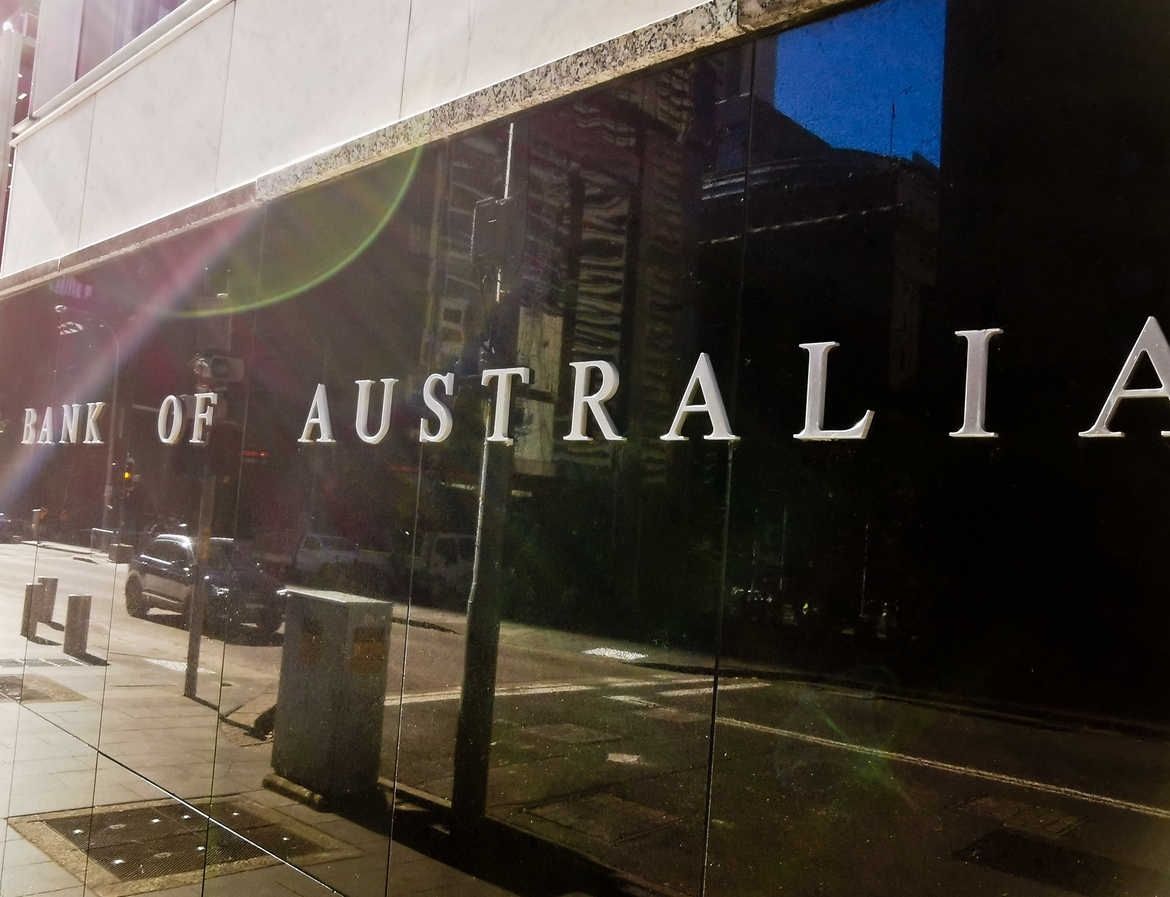
Why Did Interest Rates Rise? The Economists’ Explanation
The Economists’ Take Nicki Hutley is an independent economist and economic consultant. Alexis Gray is a senior economist for Asia Pacific at Vanguard. Diana Mousina is the deputy chief economist at AMP. They unanimously agree that the rate hikes aim to curb escalating inflation.
Gray points out three key contributing factors:
1) Pent-up demand as consumers utilize their Covid-19 savings.
2) A shift in spending habits towards physical goods, straining suppliers’ capacity to meet demand.
3) Russia’s invasion of Ukraine, impacting the production and supply chains of numerous goods, owing to constrained oil and gas supplies.
Among these, the RBA is particularly concerned about the first two, as they signify a discrepancy between supply and demand.
Gray notes that both the headline and core inflation rates have consistently exceeded the RBA’s target range of 2% to 3% for balancing supply and demand. It is peaking at 7.8% in December of the previous year.
The effectiveness of interest rate hikes in curbing inflation is due to their broad impact on Australians.
“Interest rates affect every loan across the economy, whether it’s a mortgage or a business loan. Higher rates make it more expensive to service your loan, and therefore cause you to cut back in other areas,” Gray explains. She emphasizes that even for those without debt, rising interest rates signal a need for caution in spending.
The suddenness of the interest rate hikes in 2022 and 2023 might be jarring, given the prolonged period of historically low rates. The last time the RBA raised rates was in 2010, and the pace of increase in interest rates in such a short span has not been seen since 1994.
“It’s important to remember that rates were at historical lows and once the economy was shown to be relatively robust after Covid-19, there was always going to be a normalization of rates. The big question was how far and how fast, rather than whether rates were going to rise,” Hutley points out.
Will Rates Continue to Rise?
Gray anticipates another 0.25% interest rate increase in the near future, following which there may be an additional rise before the end of 2023. She notes that while inflation seems to have peaked, it remains significantly above the 2-3% target and is not declining rapidly enough across the categories that the CPI measures. “For that reason, we think that there’s more to be done, unfortunately, which is going to be very painful.”
Mousina also foresees two more 0.25% interest rate increases before 2023 concludes, but suggests a possibility that “the cash rate could get even a little bit higher and closer to 5%.”
This potential outcome is attributed to the Fair Work Commission’s decision in June to raise the minimum wage and Award wages by 5.75%, which exceeded earlier forecasts. This action, serving as an indication to the broader market regarding wage increases, could introduce additional inflationary risks.
The latest ABS data adds to the inflationary pressures. It reveals a 1.2% increase in inflation for the September quarter, up from 0.8% in June. This has led many economists to speculate about another rate rise in the near future. Treasurer Jim Chalmers has also pointed to spikes in petrol prices, which saw an increase of over 7% in the September quarter, suggesting that inflation may persist at elevated levels.
The most recent monthly inflation data also raises concerns. It records an annual increase of 5.2% for the year ending in August, up from 4.9% in July. Although this figure includes volatile items like fuel and travel, which the RBA excludes in its assessments.
Property prices continue their upward trajectory, a factor often cited by the RBA as contributing to rate hikes. Additionally, unemployment remains low at 3.6%; the RBA aims for employment to rise to around 4.5% to counteract inflationary pressures.
What Needs to Occur for Interest Rates to Decline?
Hutley suggests that for interest rates to begin decreasing, there must be “significant further progress in inflation, because it’s still well above the target.” She also emphasizes the importance of productivity and wage growth.
Gray concurs, underscoring that bringing inflation down to the 2-3% target range is the primary prerequisite before the RBA considers rate cuts. She notes that even when it reaches that point, there is room for it to drop a further percent before rate cuts become a consideration.
Mousina is of the opinion that maintaining the cash rate above 4% in the long term may not be sustainable. “We don’t think that the cash rate needs to be at these current levels to get the impact on inflation that the RBA wants because there are real signs that inflation is going to fall over the next six months and that by the beginning of next year, it will probably be at the top of the RBA’s target band of 3%,” she remarks.
The Big Question: When?
A crucial factor influencing when interest rates might commence their descent hinges on whether Australia enters a recession. It is marked by two consecutive quarters of negative real gross domestic product (GDP) growth.
“In the past, before you got to a couple of negative quarters, you’d be talking about starting to cut rates,” Hutley observes. However, this time may differ. She posits that even if the economy isn’t particularly robust, as long as the unemployment rate stays low, the RBA might delay rate cuts. She anticipates that if interest rate cuts don’t commence by the end of 2023, which seems increasingly unlikely, either rate cuts or high expectations of them may emerge in the first to middle quarters of 2024.
Gray concurs, asserting that even in the event of a recession, it may not automatically lead the RBA to implement rate cuts. “I think that on balance, they’re going to be more focused on the inflation problem than on the growth problem, so I don’t think a recession automatically triggers rate cuts, although it obviously raises the chances of that.”
“If you look back historically when the RBA has hiked rates, they’ve tended to stay at the peak of the cycle for no more than 12 months. That might give us a rough gauge of how long they might be at the terminal rate, they might be there for six to 12 months so we’re penciling in the first cut to happen in the middle of 2024,” Gray projects.
Mousina also suggests that interest rate cuts could be on the horizon for the following year:
“We actually see about four rate cuts over the course of 2024, because we don’t think that Australia can sustain a cash rate at its current level, or even higher, for a long period of time without generating significant downside on the economy such as a rising unemployment rate and falling GDP growth.”
Recently, expectations of rate cuts in early next year have been pushed back. For instance, the Commonwealth Bank initially projected a rate cut in March of next year. Now they suggest May as a more likely scenario. Meanwhile, US investment bank Goldman Sachs initially predicted rates would be cut in August of next year. Now they are leaning towards November.
Regarding the need for further hikes this year, the recent inflation data—higher than anticipated—has aligned the Big Four (Commonwealth Bank, ANZ, NAB, and Westpac) in their forecasts. They all anticipate a 25 basis points rate increase at the November meeting, bringing the cash rate to 4.35%.
How Much Will Rates Decrease?
When interest rates eventually begin to decline, they are unlikely to return to the exceptionally low levels. The level that Australians have grown accustomed to in recent years.
“As a mortgage holder I might want interest rates at 0%, but that means the economy is completely stagnant. We have only ever been there when there’s been a major crisis, so we really hope we’re not going back there,” Gray emphasizes. “The RBA recently put the nominal neutral rate at 3.8%. That’s probably a good guess of where the neutral rate is right now.”
Hutley estimates the neutral rate, or the level at which interest rates will eventually stabilize, to be around 2.5-3%. Mousina’s estimate falls between the ranges proposed by the other economists, at 3-3.25%.
On the other hand, the Commonwealth Bank predicts rates will be reduced to 3.1%. It is a drop of about 100 basis points—by the end of the next year.
As is often the case with the economy, it remains a matter of ‘watch this space’. It is because new insights emerge into the myriad factors that can influence the trajectory of interest rates for borrowers in the foreseeable future.
READ MORE
Could Interest Rates Decrease in 2023?
Reserve Bank Maintains Cash Rate at 4.1% for Fourth Consecutive Month
