


A series of unsettling words spoken by a potential successor to Philip Lowe are sending shivers down the spines of homeowners. Australia’s Protégé of Philip Lowe hints at intensified interest rate hikes to combat inflation.
Amid discussions surrounding the replacement of Philip Lowe as Australia’s next Reserve Bank chief, the favored candidate, Dr Michele Bullock, has expressed her view. She says that aggressive interest rate hikes represent the “easier” approach to address high inflation. Michele is Dr. Lowe’s deputy and a prominent contender for the position of RBA governor in September. Bullock recently emphasized the need for further monetary policy tightening to reduce the cost of imports. Comparing Australia to other advanced economies such as the United States, she conveyed at an Australian Industry Group forum. She believes that opting for more assertive rate increases would be a favorable course of action.
During a speech to a Newcastle audience, she proposed a potentially simpler solution. Bullock stated, “It might be much easier just to jack up interest rates.” Her concise eleven-word response is expected to unsettle homeowners who have already endured twelve interest rate hikes since May 2022. It is the most significant surge since 1989. With monthly mortgage payments skyrocketing by 63% in just thirteen months. Concerns are mounting among borrowers.
Dr. Lowe’s Successor Announcement
With Dr. Lowe’s seven-year term ending on September 17, the announcement of his successor is expected in July, ahead of the parliamentary session resuming at the end of the following month, as indicated by Treasurer Jim Chalmers.
Among the leading contenders is Ms. Michele Bullock, who assumed the role of RBA deputy governor in 2022 after a distinguished 37-year tenure with the Reserve Bank. Notably, she already sits on the RBA board, making her a strong candidate to replace Dr. Lowe. If selected, she would become the first woman to lead the Reserve Bank of Australia, following in the footsteps of Janet Yellen, who became the first female chair of the U.S. Federal Reserve almost a decade ago.
However, Ms. Bullock faces potential competition from Jenny Wilkinson, the secretary of the Department of Finance, who has previous experience at the Reserve Bank. Additionally, Treasury secretary Steven Kennedy, an existing RBA board member, is also considered a contender.
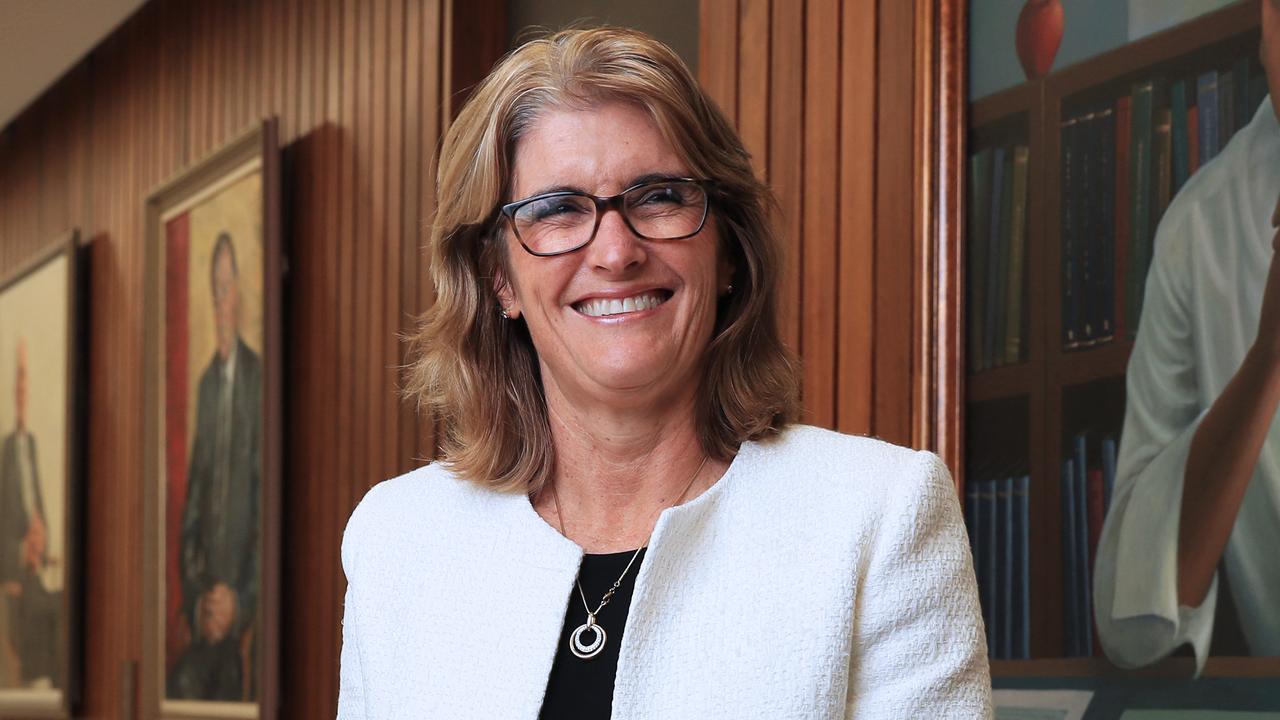
Dr Lowe’s deputy Michele Bullock
Regarding her stance on inflation, Ms. Bullock appears to be as hawkish as Dr. Lowe. Miss Bullock recently addressed the Australian Industry Group. She remarked that the RBA’s target of bringing inflation back to the 2 to 3 percent range by mid-2025 was comparatively lenient when compared to other advanced economies. Bullock further highlighted the possibility of raising interest rates. She notes that official cash rates in foreign countries exceeded those in Australia. It makes it potentially easier to address inflationary pressures. The upcoming decision holds significant implications for the future direction of the Reserve Bank and the management of inflation in Australia.
Currently, the Reserve Bank of Australia (RBA) maintains a cash rate of 4.1 percent, marking the highest level since May 2012. In contrast, the U.S. Federal Reserve’s equivalent funds rate stands at 5 to 5.25 percent, the highest recorded since 2006. A wider interest rate gap between Australia and the United States can have implications for the Australian dollar, which currently stands below the average at 67 U.S. cents. A larger disparity could weaken the Australian currency further and contribute to increased import costs, thus adding to inflationary pressures.
However, Ms. Bullock highlights that higher interest rates in Australia would incentivize savings and reduce consumer-driven inflation. She emphasizes that as interest rates rise, individuals are motivated to save rather than spend, leading to a decrease in demand. Additionally, higher interest rates tend to support a relatively higher exchange rate, resulting in lower imported inflation.
Moreover, Ms. Bullock underscores that raising interest rates is the sole tool available for addressing inflationary concerns. While it operates through various mechanisms, she emphasizes that it is the primary tool to effectively combat and decrease inflation. These insights from Ms. Bullock shed light on the relationship between interest rates, inflation, savings behavior, and the role of the RBA in managing economic factors to achieve their inflation targets.
Ms. Bullock also voiced her apprehension regarding the current low unemployment rate. It sits at a nearly 48-year low of 3.6 percent, as it could contribute to inflationary pressures. She emphasized that if unemployment remains persistently low, it could lead to an increase in inflation expectations. It will be making it more challenging for monetary authorities to bring inflation back down. Ms. Bullock highlighted the risk of ingrained inflation expectations and subsequent wage demands. All this will potentially be creating a situation where reducing inflation becomes extremely difficult.
To prevent wage growth from fueling inflation, Ms. Bullock suggested that unemployment would need to rise back to 4.5 percent by the end of 2024. Economists refer to it as the non-accelerating inflationary rate of unemployment (NAIRU). Protégé of Philip Lowe hints at intensified interest rate hikes more than the current level. It would still be below pre-pandemic levels. It is close to estimates of the current NAIRU, indicating a move toward a more sustainable economic balance point.
Conclusion
In light of these concerns, it is important to note the impact of interest rate hikes on borrowers. For instance, a borrower with an average mortgage of $600,000 and a 20 percent deposit has witnessed a substantial increase in monthly repayments. Therefore, rising by 63.4 percent from $2,306 to $3,769 since May 2022. This rise corresponds to the Commonwealth Bank’s variable rate increasing from 2.29 percent to 6.44 percent. It reflects the RBA’s cash rate climb from a record low of 0.1 percent to an 11-year high of 4.1 percent.
Furthermore, annual repayments have surged by $17,556 compared to thirteen months ago. Anticipating further hikes, Westpac, NAB, and ANZ banks are expecting two more rate increases in July and August. It potentially pushes the RBA’s cash rate to a 12-year high of 4.6 percent.
