


What Is a Self-Managed Super Fund (SMSF)?
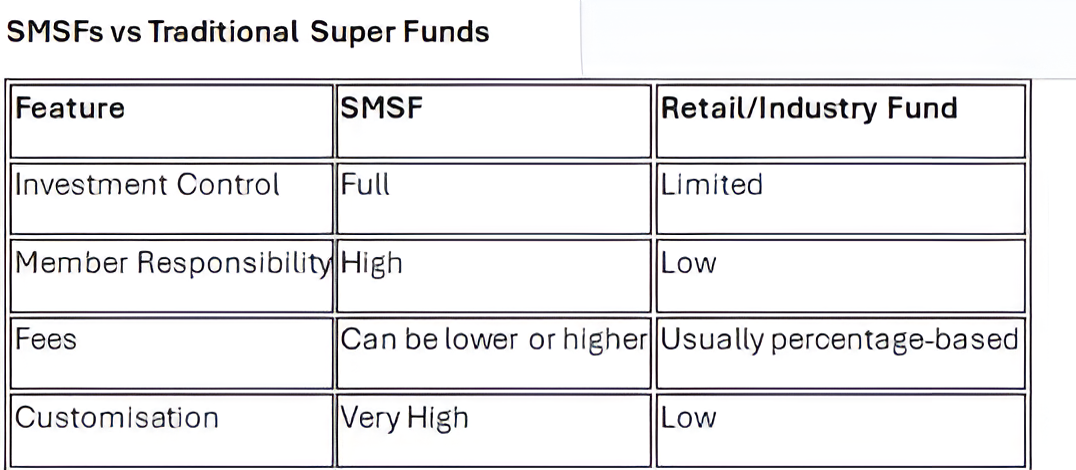
A Self-Managed Super Fund (SMSF) is a private super fund that gives members full control over how their retirement savings are invested. Unlike traditional retail or industry funds, SMSFs allow you to make your own investment decisions, including into residential or commercial property, shares, or alternative assets. An SMSF must be established and run in accordance with superannuation laws and must exist solely to provide retirement benefits to its members. Setting up and managing an SMSF comes with significant responsibilities, but it also offers greater flexibility and choice.

Key Characteristics of an SMSF
· Member-Run: SMSFs can have up to six members. Each member is usually a trustee (or director of a corporate trustee), and they are responsible for running the fund.
· Legal Entity: The SMSF is a separate legal entity with its own Tax File Number (TFN), Australian Business Number (ABN), and bank account.
· Regulated: The fund must be registered with the Australian Taxation Office (ATO) and comply with strict rules.
· Audit & Reporting: Annual audits and compliance reporting are mandatory.
What Can an SMSF Invest In?
SMSFs offer a wide range of investment options:
- Australian & international shares
- Residential & commercial property
- Term deposits
- Bonds & fixed-interest products
- Managed funds
- Collectables (e.g. art, antiques – must follow ATO rules)
- Cryptocurrency
- All investments must meet the Sole Purpose Test — ensuring that investments are made solely to provide retirement benefits to members.
Trustee Responsibilities
SMSF trustees are legally responsible for:
· Managing fund investments in line with the investment strategy
· Keeping up-to-date financial records
· Organising an annual audit
· Ensuring compliance with super laws
· Lodging tax returns and regulatory documentation
Trustees who fail in their duties may face penalties, including fines and disqualification.
Benefits of an SMSF
· Greater investment flexibility
· Control over tax strategies
· Ability to invest in direct property
· Transparency over fees and performance
· Estate planning benefits
Risks of an SMSF
· Complex compliance obligations
· Heavy penalties for mistakes
· Requires financial and legal knowledge
· Setup and ongoing costs (e.g. audits, tax returns)
· Limited access to compensation schemes if something goes wrong.
Common Questions
Can I have an SMSF with my partner or family? Yes, you can have up to six members, and they can be family or business partners.
Do I need a financial adviser to set one up? It’s highly recommended. Legal, financial, and tax advice can help you avoid costly mistakes.
Can my SMSF buy a house I live in? No. SMSF investments must meet the sole purpose test — no personal use is allowed.
Can I transfer my existing super into an SMSF? Yes, you can roll over your super from other funds into your SMSF after it’s established and compliant.
Is an SMSF suitable for everyone? No. SMSFs are best for people with higher super balances, investment experience, and the time to manage compliance.
Start Exploring SMSF Loans
If you’re considering using your SMSF to buy property, you’ll likely need a loan. Compare SMSF home loan options and lender criteria today on RateBuster.com.au.
