
Refinancing a mortgage can be a smart financial move for self-employed individuals looking to lower their repayments, access equity, or get better loan terms. However, the refinancing process for self-employed borrowers can differ significantly depending on whether you have full financial documentation or not. This article explains how self-employed home loan refinancing works with and without full financials, providing actionable advice to help you qualify.
Understanding Refinancing as a Self-Employed Borrower
Refinancing means replacing your current mortgage with a new one, potentially with a different lender. It can help you take advantage of lower interest rates, consolidate debts, or unlock cash for business or personal use.
For self-employed borrowers, lenders typically assess your income and financial health more rigorously compared to salaried applicants. That’s because your income stream can be irregular and less predictable, increasing the perceived risk for lenders. Hence, the documentation you provide plays a crucial role in how smoothly your refinance application progresses.
Refinancing Your Self-Employed Mortgage with Full Financials
What Are Full Financials?
Full financials refer to comprehensive income proof documents such as:
Business and personal tax returns (usually last two years)
Australian Tax Office (ATO) Notices of Assessment
Profit & Loss statements prepared by a registered accountant
Business Activity Statements (BAS)
Bank statements showing consistent income and expenses
Benefits of Providing Full Financial Documentation
Having full financials enables lenders to clearly evaluate your current and past business performance. It demonstrates transparency, lowers perceived risk, and usually results in better loan terms and faster approval.
Steps to Refinance with Full Financials
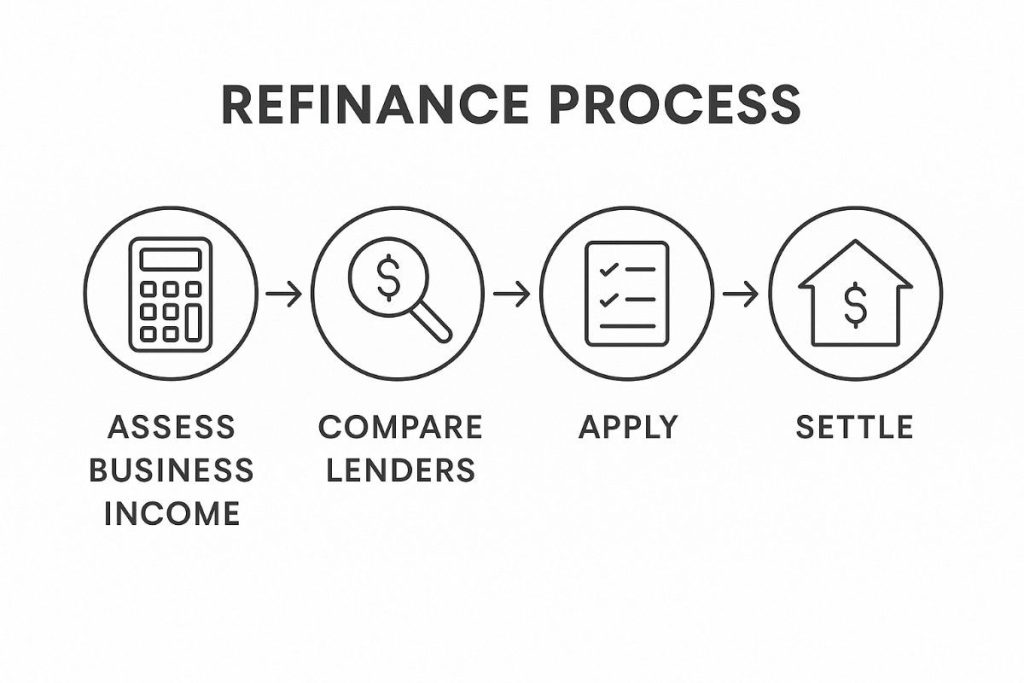
Gather all required documents: Organize tax returns, ATO statements, BAS, profit and loss reports, and bank statements.
Compare lenders: Look for lenders who offer competitive refinancing deals for self-employed borrowers with documented incomes.
Consult with a mortgage broker: Brokers specializing in self-employed finance can help you find lenders who value your full documentation.
Submit your application: Complete lender forms carefully and provide all requested documentation to avoid delays.
Negotiate terms: Once approved, compare refinancing packages, focusing on interest rates, fees, and repayment flexibility.
For more details on documentation, see the Australian Government’s MoneySmart guide on refinancing.
Refinancing Your Self-Employed Mortgage without Full Financials (Low Doc Refinancing)
What is Low Doc Refinancing?
Low Doc refinancing caters to self-employed borrowers unable to provide typical full financial documents. It relies on alternative proofs of income, such as:
Recent BAS statements
Accountant’s declaration confirming income
Bank statements demonstrating regular business deposits
Letters from business clients or contracts
Who Can Benefit from Low Doc Refinance?
New business owners without two years’ tax returns
Borrowers with complex income structures
Self-employed people with poor or irregular record-keeping
Individuals recovering from financial hardship or credit issues
Considerations and Challenges
Low Doc loans often carry higher interest rates and fees due to increased lender risk. Approval may take longer, and loan amounts might be lower than conventional refinancing.
Tips to Improve Your Low Doc Refinance Success

Maintain clear, consistent bank statements showing income flow
Work with brokers experienced in low doc loans for business owners
Provide additional supporting evidence like client contracts or invoices
Build a good credit history by paying bills and debts on time
For more advice on low doc loans, check Pepper Money’s self-employed home loan resources.
Key Factors to Prepare Before Refinancing
Know Your Credit Health
Regardless of documentation level, a good credit history greatly impacts loan approval. Check your credit report for errors and work on improving your credit score before applying.
Calculate Your Borrowing Capacity
Understand how much you can borrow based on your income, expenses, and outstanding debts. Self-employed borrowers should factor in variable income and business cycles.
Comm bank Mortgage refinance calculator
Choose Your Refinance Goal
Identify why you want to refinance: lower interest rate, access equity, consolidate debt, or switch loan features. This helps target the right lenders.
Conclusion
Refinancing your self-employed mortgage with or without full financials requires preparation and informed decision-making. If you can provide full documentation, you’re likely to enjoy quicker approvals and better rates. For those without full financials, low doc refinancing offers a viable, though sometimes pricier, option.
Partnering with a knowledgeable mortgage broker is key to navigating the complexities of self-employed finance and unlocking the best refinancing options available.