


Australia’s inflation rate has surged sharply. The latest data from the Australian Bureau of Statistics (ABS) showing consumer prices rising at an annual pace of 4.6% to March 2026, up from 3.7% in February. The increase in the Consumer Price Index (CPI) comes amid growing global uncertainty. The conflict in the Middle East fuels the biggest energy shock since the oil crises of the 1970s and 80s. Economists had widely anticipated a spike in inflation, but the magnitude highlights renewed pressure on Australia’s cost of living.
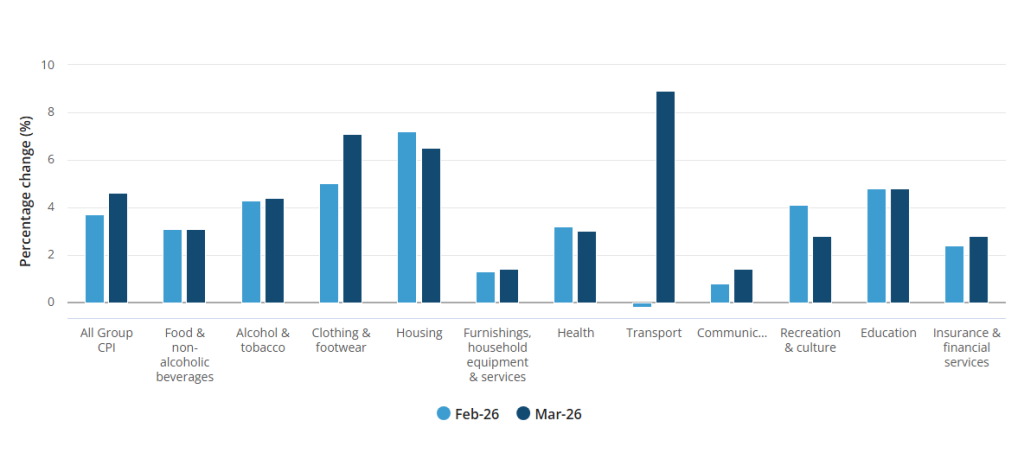
According to the ABS, CPI rose 1.1% in March alone, with transport costs emerging as the dominant driver. Transport prices jumped 9.2% over the month, largely due to a staggering 32.8% surge in automotive fuel prices, reflecting global oil market volatility. Despite the sharp rise in headline inflation, underlying inflation remains more stable. The trimmed mean inflation rate, the preferred measure used by the Reserve Bank of Australia, held steady at 3.3% in March. This suggests that while energy-driven price spikes are pushing up overall inflation, broader price pressures across the economy are not accelerating at the same pace.
ABS head of prices statistics, Sue-Ellen Luke, noted that headline inflation has reached its highest level since September 2023. She explained that volatile items such as fuel can distort monthly readings, which is why the trimmed mean provides a clearer view of underlying inflation trends.
Housing costs also continue to weigh heavily on Australian households, rising 6.5% annually and remaining the largest contributor to inflation due to their significant weighting in the CPI basket. Transport followed closely, with an 8.9% annual increase, reinforcing the impact of fuel and mobility costs on household budgets. The latest inflation figures are likely to intensify scrutiny on interest rate policy, as the Reserve Bank balances persistent cost-of-living pressures against signs that underlying inflation may be stabilising.
For borrowers, homeowners, and investors, the data signals continued uncertainty ahead, with fuel prices and global events playing an increasingly critical role in shaping Australia’s inflation outlook. This surge comes ahead of Tuesday next week’s(5th may) RBA interest rate decision.
